If you’re shopping around for a new insurance policy or if you want to improve your current rate… you are aware that certain factors which affect the bottom line are out of your hands.
These factors include your age, gender, and your previous claims record.
So let’s focus on what you CAN do to get a lower rate.
Here are 8 factors which are 100% in your control. Address them, and I guarantee you will get the lowest possible rate on your insurance!
#1 SHOP AROUND

Different companies will offer you different policies at a different price.
Don’t make a rushed commitment unless you want to pay double! Shop around to get a real sense of lower-priced policies.
Many independent sites allow you to compare insurance rates throughout Canada. And they can be incredibly helpful.
Just keep in mind that most of these sites earn a profit by charging a small commission on each sale. So contact your top company choices directly before signing anything!
Kanetix – www.kanetix.ca
This site will allow you to compare rates as well as to set up your coverage online.
What I find convenient is the way they have broken up the rate requests for classic cars, commercial vehicles, RVs, and motorcycles. The interface is very simple and user-friendly.
Insurance Hotline – www.insurancehotline.com
The process this site will put you through is very similar to what you would experience with a broker.
You’ll be asked a few basic questions before you’re shown relevant insurance quotes.
What is annoying is that once you provide your e-mail address, you’re also asked for a phone number before you’re shown any quotes.
And they only offer you “special discounts” over the phone, so you’ll end up dealing with a rep.
Whether you use a site or not, remember to ask these important questions:
• What is the minimum coverage I am required to purchase by law?
• Can you give me specific examples of a loss that would be paid under each coverage?
• What would be covered under each optional coverage (Specified Perils, Comprehensive Perils, Collision Perils, and All Perils)?
• Do I have the option to purchase “new for old” coverage and, if not, why not?
• As an insurance professional, what coverage and limits would you recommend?
#2 OPT FOR HIGH DEDUCTIBLES

The deductibles in your policy are what you’ll actually be asked to pay out of your own pocked in the case of damage..
before your insurance coverage kicks in.
If you truly want a lower rate, opt for a higher deductible. This can lower your rate by up to 40%.
And in the end it could actually make the most financial sense.
Here’s how:
Let’s assume your deductible is at $1,000.
If your vehicle is vandalized and the damage is appraised at $6,500 you will have to pay the full deductible ($1,000) while your insurer makes up the difference ($5,500).
Yes – that’s money that’s coming out of your pocket.
But, if you save $200 on your monthly insurance rate because of the high deductible, you’re reaping in annual savings of $2,400.
That means you’re ahead by $1,400 annually!
$2,400 annual rate savings – $1,000 deductible you have to pay = $1,400 total savings
..and that’s assuming you’re vehicle actually is vandalized!
Going this route does mean that you’re facing more risk behind the wheel.
BUT – you won’t be asked to pay deductibles for damage caused in a collision for which you are not found at fault.
So,
probably, you will save more money with a higher deductible.
#3 SKIP UNNECESSARY COVERAGE ON OLDER VEHICLES

If you’re driving an older vehicle which is covered by comprehensive or collision coverage you may actually be
paying more for your insurance than your vehicle is worth!
And here is a handy formula you can use to determine if you’re overpaying:
Comp & Collision Premium x 10 < Vehicle Value
In other words, your vehicle’s value should be at least 10 times higher than what you’re paying for comp and collision insurance monthly.
And if you think that ditching the extra coverage leaves you overexposed, keep in mind that an average policyholder makes a claim only once in a decade!
Chances are that your vehicle will be sold or will become completely depreciated before you ever need to make a claim.
#4 CHECK YOUR CREDIT SCORE

A raising trend in the industry is for insurance companies to use your credit score in their calculation of your rate.
And the numbers are not pretty.
If you have a bad credit score, you could be
paying an additional 40% – 50% on top of what your rate would be otherwise.
So pay your bills on time and make sure there’s nothing in your credit history that doesn’t belong there!
#5 CHECK YOUR DRIVING RECORD

One of the biggest drivers behind a high insurance rate is your driving record.
What better way to predict your future behaviour on the road than by checking your past behaviour on the road?
Insurance companies will check for prior violations and accumulated demerit points when calculating your rate.
If you’re considered a
high-risk driver you’ll definitely be hit by a high insurance rate because you’re more likely to file a claim.
The solution?
It’s simple – sign up for a safe driving course or defensive driving course. These courses go by different names but they bring about the same result. Your demerit points will go down, and so will your insurance rate.
You might even be eligible for additional discounts!
#6 NEGOTIATE FOR DISCOUNTS

There are many types of discounts that could lower your monthly insurance rate. So make sure you ask for them!
Low-Mileage Discounts
If you have a short commute to work, use a car pooling service, or don’t travel long distances with your car your annual mileage is probably lower than most!
As a result many companies may offer you a discount.
Group Insurance Discounts
It is common practice for insurance companies to offer special discount for a variety of organizations, professions, or demographics.
For example, if you’re a veteran, teacher, or work for a certain company you could be eligible for a lower rate!
Other Discounts
You can use a variety of reasons to ask for a lower rate!
Maybe your vehicle is equipped with additional safety features like an anti-theft device or motorized seatbelts. Maybe you’re a senior. Maybe you’re a student and you’re high grades meet some type of requirement.
But don’t be fooled!
It is often the case that insurance companies who offer the most discounts actually charge the highest industry rates!
#7 PAY IN FULL (IF YOU CAN)

If you decide to pay your insurance bill in installments, you’ll be subjected to unnecessary admin fees. These fees are approximately $8 – $12 per installment, depending on the insurance company.
You could be saving serious cash if you pay your insurance bill in full.
#8 DON’T LAPSE WITH YOUR COVERAGE
Affording a break in your insurance coverage will cost you!
You would be giving your insurance company grounds for raising your premium. And it could disqualify you from certain discounts.
Be smart and pay your coverage on time.
And if you’re switching to a new carrier, make sure your old policy doesn’t expire prior to when your new policy takes effect!
Let us know how you were able to lower your insurance rate in the comments below!
Read article


 The new Mazda6 is a fun-to-drive mid-size that looks great, runs efficiently and packs awesome features! Its resale value for 2014 is at 70.6% of its MSRP, which is a definite plus if you’re thinking about owning one.
How does it compare?
The new Mazda6 is a fun-to-drive mid-size that looks great, runs efficiently and packs awesome features! Its resale value for 2014 is at 70.6% of its MSRP, which is a definite plus if you’re thinking about owning one.
How does it compare?
 The SS is a large rear-wheel sporty sedan with a conservative style. It’s 6.2L V8 engine will give you aggressive performance with 425 HP. Its resale value for 2014 is 71.6% – a great number for this model’s first year on the market.
 Three cars are tied with a resale value of 72.7%, and respectively go to 8th, 7th, and 6th place.
The GMC Sierra 1500 Crew Cab SLE is GMC’s most purchased model. This vehicle is equipped with a 5.3L V8 for the whopping 355 HP and 383 lb-ft of torque. Additional features include 4-wheel drive, cylinder deactivation, direct injection and variable valve timing.
Three cars are tied with a resale value of 72.7%, and respectively go to 8th, 7th, and 6th place.
The GMC Sierra 1500 Crew Cab SLE is GMC’s most purchased model. This vehicle is equipped with a 5.3L V8 for the whopping 355 HP and 383 lb-ft of torque. Additional features include 4-wheel drive, cylinder deactivation, direct injection and variable valve timing.
 The 2014 Jeep Cherokee doesn’t please everyone’s eye, but its modest 2.4L 4-wheel drive sport submodel is its most popular version. The Cherokee keeps a resale value of 72.7% of MSRP, beating the average compact crossover resale value with 3.9%.
 The new Mini Cooper Hadrtop model is a little bigger and a little cheaper (its base price was reduced by $1,500). Its 3-cylinder turbocharged engine takes it to 6th place with a resale value of 72.7%, beating the average sport car resale value with close to 5%.
 This model blows competitor compact crossovers away thanks to its superior fuel economy and its great style. The versatile Rogue has a resale value of 73.1% of its MSRP.
 The extra-large and fuel-hungry Toyota 4Runner is far from going extinct. This SUV deserves its fan base – the vehicle has an aggressive appearance and is perfect for off-roading. The 4Runner takes 4th place with a resale value of 77.1%.
 The awesome new style of this crossover Toyota coupled with super cool new features like the Driver EasySpeak system slide the Highlander into third place. This model has a resale value of 78.8% of its MSRP.
 The 2014 Subaru Forester model features a useful rear-view camera, all-wheel driveability and the EyeSight safety suite. It deserves its 2nd place spot with an 81% resale value.
 No one would expect a sport car to take first place, but the Stingray is no ordinary car. It’s equipped with an aggressive 6.2L V8 for 450 HP and 450 lb-ft of torque. But what really makes this model popular is its Z51 performance package. The system delivers a magnetic ride control suspension setup which reacts to the terrain and driving conditions for a better driving experience. The Corvette Stingray wins 1st place with a resale value of 84.7%.
 When you step down on your


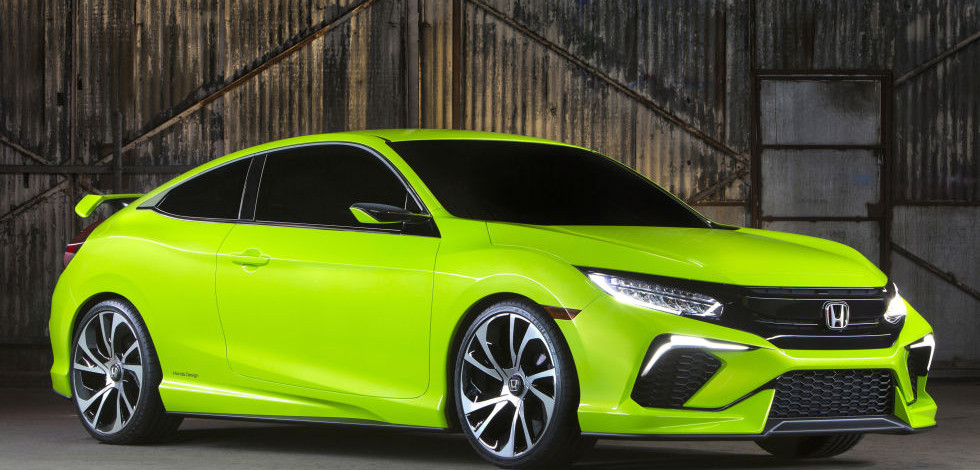


 Image Credit: Honda via CivicX.com
 One fun way to figure out how far you can drive on empty is by visiting the site
  To fill or not to fill?
I’m joking. I’ll leave Shakespeare references out of this.
Another way to figure out how far you can drive on empty is by… figuring out how much fuel you have left in your tank! And most vehicles will signal that you’re out of gas when their fuel levels drop below 1/8 of the tank.
So to calculate your range, you need to consider how heavy your vehicle is, factor in your estimate of the remaining fuel (1/8 of the tank), and then come up with a number out of thin air!
To fill or not to fill?
I’m joking. I’ll leave Shakespeare references out of this.
Another way to figure out how far you can drive on empty is by… figuring out how much fuel you have left in your tank! And most vehicles will signal that you’re out of gas when their fuel levels drop below 1/8 of the tank.
So to calculate your range, you need to consider how heavy your vehicle is, factor in your estimate of the remaining fuel (1/8 of the tank), and then come up with a number out of thin air!
 The best way to figure out how far your car can drive on empty is to see how far your car can drive on empty.
So next time your gas light comes on, stay behind the wheel and drive until you’re truly left stranded somewhere.
Then record that number and let me know what it is in the comments below!
The best way to figure out how far your car can drive on empty is to see how far your car can drive on empty.
So next time your gas light comes on, stay behind the wheel and drive until you’re truly left stranded somewhere.
Then record that number and let me know what it is in the comments below!
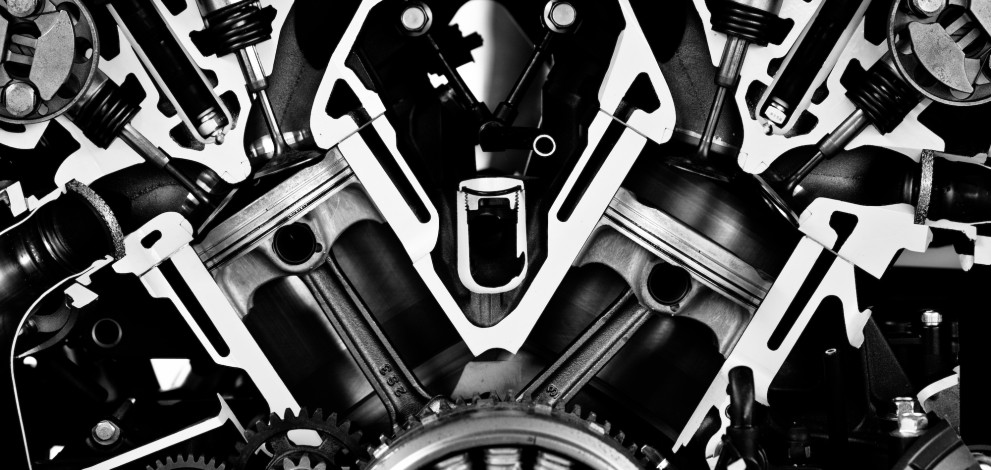
 Begin by inspecting all engine and drivetrain components.
Make sure there is no damage to the distributor, spark plugs, the wiring or the carburetor. Make sure that all accessories like your headers, alternator, and the power steering pump are on tight.
Remember that even your assembled engine can sustain damage during shipping and handling.
So, check for leaks. And check your engine’s fluid levels.
Begin by inspecting all engine and drivetrain components.
Make sure there is no damage to the distributor, spark plugs, the wiring or the carburetor. Make sure that all accessories like your headers, alternator, and the power steering pump are on tight.
Remember that even your assembled engine can sustain damage during shipping and handling.
So, check for leaks. And check your engine’s fluid levels.
 Before you install your oil
  Use a mineral-based engine oil to break in your new engine. This will help your piston rings to seat.
The “seating” is actually the proper match between the piston rings and the cylinder. If the rings don’t create a proper seal your engine will use excess oil, leading to a loss in compression.
After the initial 6,000 km break-in you can switch to synthetic oil if you wish.
Use a mineral-based engine oil to break in your new engine. This will help your piston rings to seat.
The “seating” is actually the proper match between the piston rings and the cylinder. If the rings don’t create a proper seal your engine will use excess oil, leading to a loss in compression.
After the initial 6,000 km break-in you can switch to synthetic oil if you wish.
 Plan ahead for this one.
Fill the cooling system with a 1:1 mix of water and a premium coolant. Do this a couple of hours before starting your engine. And leave the radiator cap off.
This will get rid of trapped air inside the system.
If you skip this step, you may notice extreme temp gauge readings once you start your engine.
And you risk water pump cavitation.
Plan ahead for this one.
Fill the cooling system with a 1:1 mix of water and a premium coolant. Do this a couple of hours before starting your engine. And leave the radiator cap off.
This will get rid of trapped air inside the system.
If you skip this step, you may notice extreme temp gauge readings once you start your engine.
And you risk water pump cavitation.
 The next step of the break-in process is to set the ignition timing. This will ensure you’re achieving the maximum cylinder pressure at the correct crankshaft position.
You will need to experiment to arrive at an optimal timing.
It should lie between 32 and 38 degrees before top dead center.
The next step of the break-in process is to set the ignition timing. This will ensure you’re achieving the maximum cylinder pressure at the correct crankshaft position.
You will need to experiment to arrive at an optimal timing.
It should lie between 32 and 38 degrees before top dead center.
 Following a break-in plan will speed up the process and ensure all of your engine’s components are seated.
Basically, you should be driving your engine’s first 300 km at varying speeds and loads. Engage in some full throttle runs from a rolling start. But remember to cool your engine after.
If you want to follow a more detailed plan, try out this one:
1. Accelerate with medium throttle to 4,500 RPM four or five times. Slowly go down to 30 km/h.
2. Accelerate with hard throttle to 5,000 RPM twice. Slowly go down to 30 km/h.
3. Allow your engine to cool down. Change your oil and filter. Check your coolant levels.
4. Drive normally for the next 1,000 km, but keep your engine running below 5,000 RPM and avoid idle.
Following a break-in plan will speed up the process and ensure all of your engine’s components are seated.
Basically, you should be driving your engine’s first 300 km at varying speeds and loads. Engage in some full throttle runs from a rolling start. But remember to cool your engine after.
If you want to follow a more detailed plan, try out this one:
1. Accelerate with medium throttle to 4,500 RPM four or five times. Slowly go down to 30 km/h.
2. Accelerate with hard throttle to 5,000 RPM twice. Slowly go down to 30 km/h.
3. Allow your engine to cool down. Change your oil and filter. Check your coolant levels.
4. Drive normally for the next 1,000 km, but keep your engine running below 5,000 RPM and avoid idle.


 Upgrading your vehicle’s lighting system is not just an optional luxury.
Installing appropriate lighting and signaling devices for your own unique driving style and needs will truly take your driving experience to the next level!
Which is why you’ve decided to invest in new automotive lights..
Upgrading your vehicle’s lighting system is not just an optional luxury.
Installing appropriate lighting and signaling devices for your own unique driving style and needs will truly take your driving experience to the next level!
Which is why you’ve decided to invest in new automotive lights..
 The main advantage of LED lights is their efficient energy consumption.
These lights use up to 75% less energy in comparison to halogen lights. If halogen lights have around 6,000 hours of life in them, LED lights have close to 30,000 hours of life. That’s 5 times more!
The main advantage of LED lights is their efficient energy consumption.
These lights use up to 75% less energy in comparison to halogen lights. If halogen lights have around 6,000 hours of life in them, LED lights have close to 30,000 hours of life. That’s 5 times more!


 The main advantage of halogen lights is their affordable price.
If you’re on a budget and don’t want to spend a lot on a fancier replacement, the better option might be a standard
The main advantage of halogen lights is their affordable price.
If you’re on a budget and don’t want to spend a lot on a fancier replacement, the better option might be a standard 


 Each type of light has its unique set of advantages and disadvantages. The best technology for you depends on your priorities and needs.
My advice is, whatever you decide, opt for lighting products from trusted brands like
Each type of light has its unique set of advantages and disadvantages. The best technology for you depends on your priorities and needs.
My advice is, whatever you decide, opt for lighting products from trusted brands like